
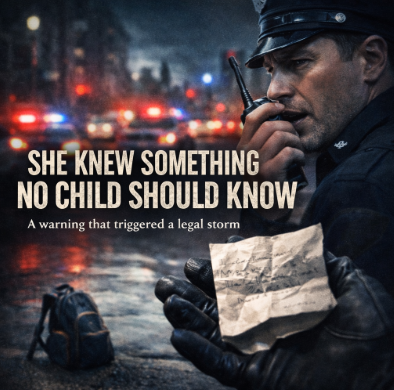
Part 2: The Cost of Silence
The first thing Daniel Ruiz learned was that silence had a price.
It showed up in the form of certified letters, thick envelopes stamped LEGAL NOTICE, and voicemails that stopped just short of threats. By the end of the week, his kitchen table looked like the evidence room at headquarters—insurance denial letters, medical billing statements, copies of motions filed by an aggressive defense attorney whose name appeared on everything like a watermark.
The man from Caldwell Avenue had resources.
That alone was unsettling.
Daniel sat back in his chair, rubbing his temples as the words blurred together: civil liability, unlawful search, damages, emotional distress. The lawsuit wasn’t just against the department. His name was listed personally.
He exhaled slowly.
This was how it worked. Intimidate. Exhaust. Make the truth too expensive to chase.
His phone buzzed again.
This time, it wasn’t blocked.
“Ruiz,” he answered.
“You weren’t supposed to keep digging,” the voice said.
Daniel straightened. “Who is this?”
A pause. Then: “Someone who understands insurance law better than you think.”
The call ended.
Two hours later, Daniel sat across from Milwaukee’s most relentless civil litigation attorney—an old academy acquaintance who’d left the force for law school after a line-of-duty injury.
“You’ve got two problems,” the attorney said, scanning the file. “One legal. One financial.”
“Start with the legal.”
“The defense is claiming your entry violated the Fourth Amendment. If they win, the evidence goes out. If that happens, their counter-lawsuit for damages gains traction.”
“And the financial?”
The attorney tapped a page. “This man’s been moving money through structured insurance settlements. Disability claims. Wrongful death benefits tied to his wife’s passing. If this goes public, the insurers are exposed too.”
Daniel frowned. “So they’ll fight it.”
“They’ll bury it,” the attorney corrected. “Unless you prove fraud.”
The hospital confirmed it the next morning.
At Ann & Robert H. Lurie Children’s Hospital of Chicago, a pediatric neurologist walked Daniel through the findings.
“She was being medicated to simulate symptoms,” the doctor said quietly. “Consistent sedation. Enough to justify repeat hospital visits. Enough to inflate billing.”
“For insurance?” Daniel asked.
“For settlements,” the doctor replied. “And leverage.”
The girl—now placed with a temporary foster family under an emergency court order—was recovering quickly. Too quickly for someone who was supposedly chronically ill.
“She’s healthy,” the doctor added. “Traumatized. But healthy.”
Daniel thanked her and stepped into the hallway, his pulse pounding.
It wasn’t neglect.
It was a business model.
The man’s name surfaced in other places once Daniel knew where to look.
Property records. Insurance databases. Civil court dockets in Indianapolis and St. Louis.
Different addresses. Different partners.
Same pattern.
A sick dependent. A tragic story. A denied insurance claim followed by aggressive legal action. Quiet settlements sealed with confidentiality agreements.
Millions, spread thin enough to stay invisible.
Until now.
The pressure escalated fast.
Daniel was placed on administrative leave pending the internal review. His badge was taken. His service weapon locked away. Officially, it was procedural.
Unofficially, it was a message.
The lawsuit followed within days.
The filing alleged emotional harm, unlawful detention, reputational damage. The damages requested were obscene.
His attorney whistled low when he read the number. “They’re trying to scare you into settling.”
“Will the city back me?” Daniel asked.
The attorney didn’t answer immediately.
“That depends on politics,” he said finally. “And insurance.”
Daniel laughed bitterly. “Everything does.”
The girl testified via recorded interview the following week.
A child advocate sat beside her. A social worker behind the camera. No uniforms. No pressure.
Just the truth.
She talked about rehearsing symptoms. About being told to stay quiet. About the notebook where her father practiced legal language late at night.
“What did he say would happen if you told?” the advocate asked gently.
She swallowed. “That no one would believe me. And that he’d make me disappear.”
Daniel watched the footage later, fists clenched.
No child should know words like lawsuit, insurance adjuster, settlement negotiation.
But she did.
The break came from an unexpected place.
An internal auditor at a major insurance firm—one of the companies listed in the man’s prior settlements—requested whistleblower protection. Federal.
Daniel’s attorney called him at midnight.
“They’ve got documents,” he said. “Internal emails. Proof executives approved payouts to avoid exposure. They knew the claims were suspicious.”
Daniel closed his eyes. “So it’s bigger.”
“Much bigger.”
By morning, federal agents were involved. Subpoenas were issued. Bank accounts frozen.
The civil case stalled.
Then collapsed.
The courtroom was silent when the judge spoke.
“This court finds sufficient evidence of insurance fraud, medical abuse, and coercion of a minor,” she said. “A permanent protective court order is hereby issued.”
The gavel came down.
Daniel exhaled a breath he felt like he’d been holding for months.
The man from Caldwell Avenue didn’t look at him as marshals led him away.
He didn’t need to.
The media tried to turn it into something simple.
A bad father. A good cop. A happy ending.
Daniel knew better.
Behind closed doors, the settlements were being renegotiated. Class actions were forming. Attorneys circled like sharks.
Hospitals reviewed billing practices. Insurance companies rewrote policies.
Quietly, carefully, the system protected itself.
The girl was placed with relatives out of state. Somewhere quieter. Somewhere safer.
Before she left, she asked to see Daniel one last time.
“You believed me,” she said.
He knelt in front of her, just like that first day. “You were brave.”
She hesitated. “What happens to people who don’t get believed?”
Daniel didn’t lie. “Sometimes they disappear into paperwork.”
She nodded, too wise for her years.
Then she hugged him and walked away.
Months later, Daniel returned to duty.
The lawsuit against him was dismissed with prejudice. The department issued a statement praising procedural compliance.
No apology.
He didn’t expect one.
On his first shift back, he walked the same street where it had all begun.
Traffic. Noise. Life.
Another city, another day.
A folded piece of paper brushed against his palm as someone passed by.
Daniel froze.
He looked down.
It was blank.
Just trash, caught by the wind.
He let out a slow breath and kept walking.
Some warnings were loud.
Others were almost invisible.
And some—he knew now—were only heard by those willing to stop, listen, and risk everything to act.
End of Part 2


One thought on “(Part 2) She Knew Something No Child Should Know”