The morning rush filled the streets of downtown Chicago.
People hurried to work with coffee cups in their hands.
Taxi horns echoed between tall glass buildings.
Street musicians played for spare change.
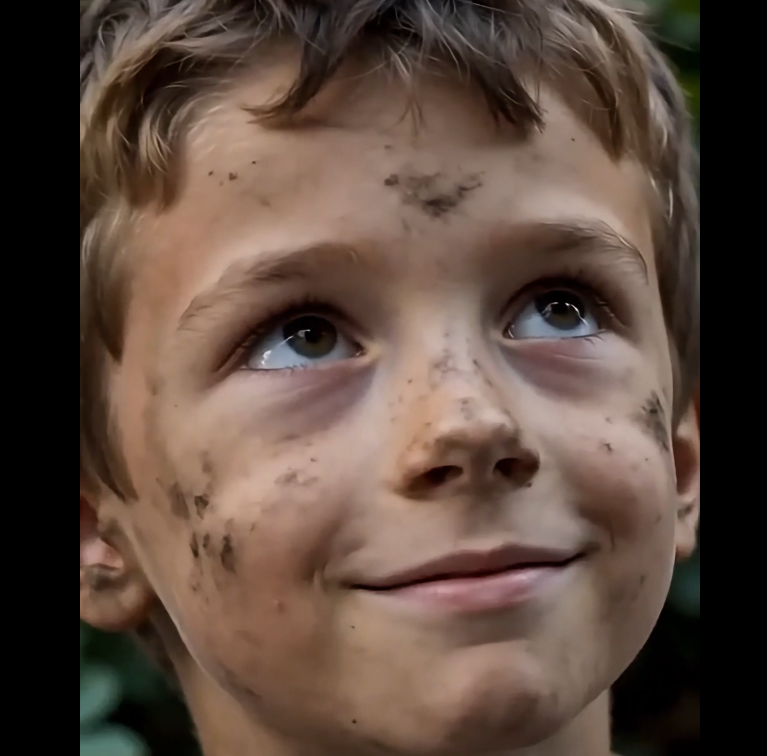
No one paid much attention to the small homeless boy sitting quietly on the corner.
He looked no older than ten.
His clothes were faded and worn.
His sneakers had holes in them.
A small cardboard sign rested beside him.
It didn’t ask for money.
It simply read:
“God sees every choice.”
Most people ignored him.
Some dropped a dollar into the small metal cup near his feet.
Others looked away.
The boy thanked every person with the same gentle smile.
Across the street, a black luxury SUV stopped in front of a skyscraper.
Its door opened.
Out stepped Richard Coleman, one of the city’s most successful businessmen.
Richard owned several factories across the country.
He had built a fortune worth hundreds of millions.
Employees feared him.
Competitors respected him.
He believed money solved every problem.
As he walked toward his office, he noticed the little boy.
Richard stopped.
He stared for a moment before shaking his head.
“What a waste,” he muttered.
He reached into his wallet.
Instead of handing the money respectfully, he flicked several twenty-dollar bills onto the sidewalk.
The notes landed near the boy’s shoes.
People nearby watched.
Richard smiled proudly.
“There,” he said loudly.
“Buy yourself some food.”
The crowd expected the child to grab the money immediately.
Instead, the boy looked at the bills.
Then he looked at Richard.
A calm smile appeared on his face.
His voice was soft.
“Keep it.”
Richard raised an eyebrow.
The boy continued.
“You’ll need that money soon.”
Several people exchanged confused looks.
Richard laughed so loudly that pedestrians turned around.
“I own three factories.”
“I have more money than you’ll ever see in your lifetime.”
He leaned closer.
“You should worry about yourself, kid.”
The boy didn’t argue.
He simply nodded.
“I hope you’re right,” he replied.
Richard laughed again and turned to leave.
At that exact moment, someone shouted from the other side of the street.
“Mr. Coleman!”
A woman in a gray business suit ran toward him.
It was his personal secretary, Melissa.
She was usually calm.
Today she looked terrified.
Completely out of breath, she reached him.
She whispered into his ear.
Richard’s smile disappeared instantly.
“What?”
Melissa swallowed.
“Sir… Factory Number One is on fire.”
Richard blinked.
“What are you talking about?”
“It’s serious.”
“The fire department is already there.”
“Several production lines have collapsed.”
“News helicopters are broadcasting it live.”
Richard grabbed his phone.
More than fifty missed calls.
Dozens of emergency messages.
His financial director.
His operations manager.
Insurance agents.
Lawyers.
News reporters.
His hands began to shake.
Melissa continued.
“The damage looks catastrophic.”
Richard felt dizzy.
His knees gave way.
He collapsed onto the sidewalk.
The crowd gasped.
Just seconds earlier, he had stood there laughing.
Now he looked completely broken.
Slowly, he turned toward the homeless boy.
The child was still sitting exactly where he had been.
Calm.
Peaceful.
Richard stared at him.
His voice trembled.
“Who are you?”
The boy stood up.
He smiled kindly.
“That’s the wrong question.”
Richard frowned.
“What do you mean?”
The boy looked toward the smoke beginning to rise in the distant skyline.
“You should be asking…”
“What are you supposed to learn?”
Those words stayed in Richard’s mind.
The fire destroyed nearly eighty percent of the factory.
Fortunately, every worker escaped safely.
No lives were lost.
But financially, the damage was enormous.
Production stopped.
Major contracts were canceled.
Company shares fell sharply.
Television stations replayed the burning building all day.
Richard returned home that evening.
His mansion felt strangely empty.
For the first time in years, he couldn’t sleep.
He kept thinking about the little boy.
How could a child know something that hadn’t happened yet?
The next morning, Richard returned to the same street corner.
The boy was gone.
He searched every nearby block.
Nothing.
He asked the coffee shop owner.
“Have you seen the homeless boy?”
The owner nodded.
“He comes sometimes.”
“Do you know where he lives?”
The owner shrugged.
“No one does.”
Richard came back again the following day.
Still nothing.
Days turned into weeks.
Then one rainy afternoon, he finally saw him sitting beneath a bus shelter.
Richard walked over quietly.
He carried a bag filled with sandwiches and blankets.
The boy smiled.
“I wondered when you’d come back.”
Richard sat beside him.
“I’ve been looking everywhere for you.”
The boy accepted the sandwich.
“Why?”
Richard hesitated.
“I need answers.”
The boy laughed softly.
“Everyone thinks they need answers.”
“What they usually need…”
“…is perspective.”
Richard stared at him.
The child spoke calmly.
“You believed money made you untouchable.”
“You threw those bills because you wanted people to see your generosity.”
“You weren’t helping me.”
“You were feeding your pride.”
Richard lowered his eyes.
He couldn’t deny it.
The boy continued.
“Real kindness never needs an audience.”
Those words struck Richard harder than any business loss.
For the first time in decades, he admitted something aloud.
“I’ve spent my whole life chasing money.”
“I forgot about people.”
The boy nodded.
“Then maybe losing something helped you find something.”
Richard returned to work with a different mindset.
Instead of cutting jobs to recover losses, he protected every employee.
He reduced executive bonuses, including his own salary.
He personally visited injured workers.
He established emergency funds for struggling families.
People noticed the change.
Employees who had once feared him now respected him.
The company slowly recovered.
Years passed.
Richard never forgot the mysterious child.
He funded homeless shelters.
He created scholarship programs for children living on the streets.
Every Christmas, he served meals himself instead of making speeches.
Whenever reporters asked why he had changed, he always smiled.
“I met a teacher.”
They would ask where that teacher worked.
Richard simply replied,
“On a street corner.”
One cold winter evening, Richard returned to the same intersection.
Snow covered the sidewalks.
The city lights reflected beautifully across the streets.
He placed a bouquet of white flowers beside the old brick wall where the boy had once sat.
As he turned to leave, an elderly janitor sweeping nearby spoke.
“You knew that boy?”
Richard stopped.
“Yes.”
The old man looked surprised.
“That’s strange.”
“What do you mean?”
“I’ve worked on this block for twenty-five years.”
“I’ve seen thousands of people.”
“But I’ve never seen any child sitting there.”
Richard frowned.
“What?”
The janitor pointed toward the empty corner.
“People sometimes stop here.”
“They look confused.”
“They ask about a little homeless boy.”
“But no security camera has ever captured anyone sitting there.”
Richard felt a chill run through his body.
“That’s impossible.”
The janitor shrugged.
“Maybe.”
Richard slowly looked back toward the sidewalk.
The metal cup.
The cardboard sign.
The little blanket.
Everything was gone.
Only one thing remained.
A single folded piece of paper rested against the wall.
Richard picked it up.
His hands trembled.
Inside was a handwritten sentence.
It read:
“The richest people aren’t those who keep their money… but those who change before life forces them to.”
There was no signature.
No explanation.
Richard looked around.
The street was empty.
A gentle wind carried snow across the pavement.
He smiled quietly.
For the first time in his life, he realized the greatest fortune he had ever received wasn’t money.
It was a warning.
And he had been given one final chance to become the man he should have been all along.