The Wrong Defendant
No one noticed her at first.
That was the strange thing.
The courthouse in Cook County, Illinois, was overflowing that morning—attorneys rushing between floors, defendants in wrinkled suits pacing nervously, families whispering prayers under their breath.
The marble hallway echoed with footsteps and tension, the kind that clung to your skin. Verdict day always felt heavier. Like the air itself knew lives were about to change.
She stood near the wall, half-hidden behind a column, clutching a worn leather purse with both hands.
Mid-twenties. Plain clothes. No phone out. No earbuds. No one she seemed to belong to.
And yet, her eyes never left Courtroom 4B.
Inside, a man sat confidently at the defense table.
His suit was expensive. Navy blue. Perfectly tailored. His hair was neatly combed, not a strand out of place. He leaned back in his chair like someone waiting for a delayed flight—not like someone facing a verdict that could mean life in prison.
His name, according to the docket posted outside the courtroom, was Marcus Hale.
Charged with aggravated vehicular manslaughter. A fatal hit-and-run. One victim. One night. One mistake—according to his defense attorney.
The prosecution had called it airtight.
The defense had called it circumstantial.
And now, after three weeks of testimony, it was almost over.
The jury was out.
The judge had ordered everyone to remain in the building.
And that was when the young woman moved.
The Whisper
Sheriff Daniel Crowe had been standing in that hallway for nearly six hours.
He was a twenty-year veteran of courthouse security. He’d seen breakdowns, fights, even a man faint during sentencing. Nothing rattled him anymore. Or so he thought.
He was checking his watch when he felt a hand grab his sleeve.
Not hard.
Desperate.
He turned sharply, instinct kicking in.
The woman’s face was pale. Her eyes were wide, fixed on his like she was afraid to look away even for a second.
“He’s not supposed to be here,” she whispered.
Crowe frowned. “Ma’am, you need to step back—”
She shook her head fast. “Please. I don’t have time.”
Before he could call another officer, she pressed a folded piece of paper into his palm.
Her fingers were shaking.
“Just… just look,” she said.
Then she stepped back into the crowd as if she’d never been there.
Crowe glanced down.
Four words were written in hurried black ink:
Wrong defendant. Check the scar.
His jaw tightened.
He looked up.
She was gone.
The Scar
Crowe had worked enough cases to know when something felt off.
Anonymous tips were common. Most were nonsense. Some were vindictive. A few were dangerous.
But something about the woman’s eyes stayed with him.
He walked toward the glass wall separating the hallway from Courtroom 4B.
Inside, Marcus Hale was laughing quietly with his attorney.
Crowe studied him carefully.
That’s when he saw it.
Just above the collar line. Faint. Easy to miss.
A thin, pale scar running diagonally along the left side of his neck.
Crowe’s stomach dropped.
Because the original police report—the one from two years ago—had mentioned a scar.
Not on Marcus Hale.
But on the suspect who fled the scene.
Crowe turned and walked quickly toward the security office.
The Case Everyone Forgot
Two years earlier, the accident had barely made the national news.
A single mother named Elaine Porter had been killed crossing an intersection in Evanston, struck by a speeding black sedan that never stopped. Surveillance footage had been grainy. Witness descriptions conflicted. The license plate was partially obscured.
The case stalled.
Until six months later.
Marcus Hale’s car had been flagged in a routine traffic stop. Same model. Same color. Partial plate match. He had no alibi strong enough to survive scrutiny.
The prosecution built its case fast.
Too fast, some said.
But the public wanted closure. The victim’s family wanted justice. And Marcus Hale had money—money for attorneys, experts, and damage control.
Now, the jury was minutes away from deciding his fate.
Crowe pulled up the digital case file on his tablet.
He scrolled.
Photos. Reports. Witness statements.
Then he saw it.
An early note from a responding officer on the night of the accident:
Suspect observed briefly exiting vehicle. Male. Late 30s. Muscular build. Distinct diagonal scar on left side of neck.
Crowe’s eyes snapped back to the courtroom.
Marcus Hale looked younger than that.
And slimmer.
The Call That Changed Everything
Crowe keyed his radio.
“Control, this is Crowe.”
“Go ahead.”
“Lock the exits on Floor Four. Quietly.”
There was a pause.
“Reason?”
“Possible misidentification in an active trial.”
Another pause. Longer.
“Copy that.”
Crowe turned just as the courtroom doors opened slightly.
The bailiff stepped out.
“Sheriff,” she said. “Jury’s back.”
Crowe’s pulse spiked.
This was happening too fast.
The Woman Returns
She reappeared near the staircase.
The same woman.
Her eyes met Crowe’s.
She didn’t smile. Didn’t nod.
She mouthed two words:
“Too late.”
Crowe moved toward her, but she turned and disappeared down the stairs.
“Damn it,” he muttered.
Inside the courtroom, everyone was standing.
The judge adjusted her glasses.
The jury foreperson clutched the verdict form with trembling hands.
Marcus Hale sat upright now. Calm. Confident.
Like a man who already knew the outcome.
The Verdict That Almost Was
“We, the jury,” the foreperson began, “find the defendant—”
“WAIT.”
Crowe’s voice echoed louder than he intended.
Every head turned.
The judge’s gavel slammed.
“Sheriff, this is highly inappropriate—”
“Your Honor,” Crowe said, stepping forward, “I need a moment. For the record.”
The courtroom erupted into murmurs.
The defense attorney stood. “This is outrageous. We demand—”
Crowe held up his tablet.
“New information regarding suspect identification.”
The judge’s eyes narrowed.
“Approach.”
Crowe walked to the bench, heart pounding.
He lowered his voice.
“There may be a wrong defendant seated at counsel table.”
Silence.
The judge stared at him.
“You’re telling me this now? After closing arguments?”
Crowe swallowed. “Yes, Your Honor. And I believe releasing this man today could expose the court to serious legal liability.”
The word liability landed hard.
The judge exhaled slowly.
She looked at Marcus Hale.
Then at the jury.
Then back at Crowe.
“Bailiff,” she said quietly, “escort the jury out. We’re taking a recess.”
Marcus Hale’s smile faltered—for the first time.
The Breakdown
The moment the jury exited, Marcus Hale stood up.
“This is ridiculous,” he snapped. “I have a job. A reputation. You can’t just—”
“Sit down,” the judge ordered.
His attorney leaned in, whispering urgently.
Crowe watched Marcus closely.
The scar on his neck seemed more visible now.
Or maybe Crowe was just seeing it clearly for the first time.
The Name No One Knew
An hour later, Crowe sat in a small interview room with the woman.
She’d finally agreed to talk.
Her name was Rachel Monroe.
She worked in medical billing.
No criminal record. No known connection to the victim.
So why risk everything?
“Because I already made this mistake once,” she said quietly.
Crowe leaned forward. “What mistake?”
Rachel’s hands clenched together.
“I testified in this case. Two years ago.”
Crowe frowned. “You’re not listed—”
“I was anonymous,” she said. “I was the nurse on call that night.”
His breath caught.
“I treated a man with a neck wound,” she continued. “He came in under a fake name. Said he’d been mugged.”
She looked up at Crowe, eyes glassy.
“I believed him.”
Crowe’s chest tightened.
“And today?”
“I recognized the scar,” she said. “But not on the man you think.”
The Real Defendant
Rachel slid a photo across the table.
It was grainy. Taken in poor lighting.
But the scar was unmistakable.
Crowe stared at it.
“Who is this?” he asked.
Rachel swallowed.
“A man who walked free because I stayed quiet.”
She hesitated.
“Until now.”
Outside, reporters were already gathering.
Inside, a verdict had been stopped seconds before being read.
And somewhere in Chicago, the real killer was watching the news—realizing his time was running out.
But the question remained:
Was Marcus Hale an innocent man about to be framed…
or a criminal who’d planned this escape perfectly?
👉 Continue to Part 2 to uncover the truth, the lawsuit that followed, and the court order that changed everything.
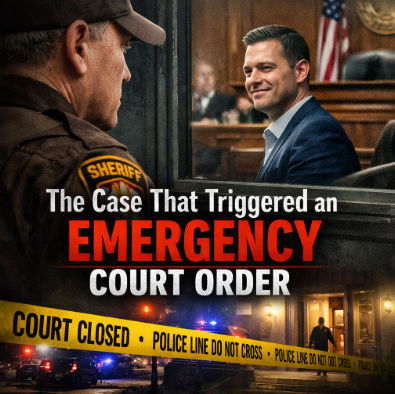
Part 2 – (Part 2) The Case That Triggered an Emergency Court Order