
The paper didn’t belong in this world.
Officer Daniel Brooks knew that the moment he unfolded it under the harsh white lights of the precinct. It wasn’t just unreadable—it was unnerving. The symbols carved across the page twisted in patterns that felt deliberate, intelligent… almost alive. Not scribbles. Not art. Code.
Brooks had seen code before. Drug rings. Smugglers. Terror cells. This wasn’t any of that.
“This better not be a joke,” he muttered.
He slammed the paper onto the steel desk, the echo snapping every head in the room toward him.
“Find someone who can decipher this,” Brooks barked at the younger officer standing across from him. “I don’t care if it’s NSA, CIA, or some basement genius at MIT. I need answers. Now.”
The officer leaned in, squinting. “It’s not Spanish. Not Russian. Not Arabic either.”
Then a voice rose from behind the bars—quiet, steady, confident.
“I can decipher that code for you.”
The room froze.
Every sound—the buzzing lights, the distant phones, the hum of the city outside—seemed to shut off at once.
Brooks turned slowly.
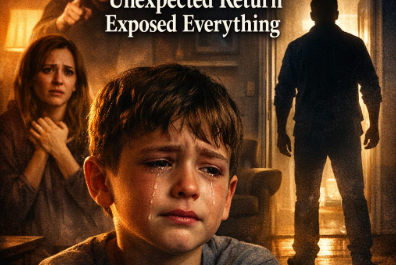
Behind the holding cell bars sat a kid. Maybe twelve. Thin. Hood pulled low. Hands folded in his lap like he was waiting for a teacher to call his name.
Brooks laughed, sharp and dismissive.
“Stop your bullshit,” he said. “This isn’t your child’s game.”
The kid didn’t react.
He didn’t smile.
He didn’t argue.
He didn’t look away.
He just stared at the paper.
And that’s when Brooks felt it—that deep, instinctive twist in his gut that every cop learns to trust.
Something about this night was about to go very wrong.
Two hours earlier, the kid hadn’t even existed to them.
The call had come in just after midnight—routine patrol, abandoned warehouse district, possible trespassing. Brooks had expected junkies or copper thieves. Instead, they’d found a single kid standing alone near a chain-link fence, staring at the river like he was waiting for something to arrive.
No weapon.
No resistance.
No explanation.
When asked his name, the kid answered without hesitation.
“Eli Carter.”
They ran it through the system.
Nothing.
No priors. No missing person reports. No school alerts. No foster record. No medical file. Nothing that suggested he should exist—at least not in any database that mattered.
That alone was unusual.
Kids left digital footprints everywhere. Social media. School portals. Gaming accounts. Something. Eli Carter had none of it. His life looked… erased. Carefully.
Brooks should’ve let him go by morning.
Then the paper showed up.
An anonymous tip had brought it in—taped beneath a park bench three blocks from the station. No fingerprints. No DNA. Just symbols and a single sentence written in plain English at the bottom.
YOU HAVE 24 HOURS.
That was when the captain locked the doors and canceled all leave.
This wasn’t a normal shift anymore.
Back in the holding area, Brooks crossed his arms and stared at the kid like he was a bad magic trick.
“You even know what language that is?” Brooks asked.
Eli shook his head slightly. “It’s not a language.”
Brooks smirked. “Of course it isn’t.”
“It’s a layered cipher,” Eli continued. “Three systems combined. One ancient. One modern. One custom-built.”
The smirk vanished.
Officer Ramirez shifted beside Brooks. “You’re saying this is code?”
Eli nodded. “A warning. And a test.”
Brooks felt irritation crawl up his spine. “A test for who?”
Eli hesitated—just long enough to be noticeable.
“For you.”
The word hit harder than it should have.
Brooks stepped closer to the bars. “You want to play genius? Fine. Tell me what it says.”
Eli leaned forward. His voice dropped.
“I can’t.”
Brooks laughed again. “Didn’t think so.”
“Not yet,” Eli added. “You’re missing the second page.”
The room went silent.
Brooks turned sharply toward the desk. Just one sheet of paper. No tear marks. No staples. No signs anything had been removed.
“No one said anything about a second page,” Brooks said slowly.
Eli tilted his head. “Then you’re already behind.”
Brooks snapped his fingers. “Search intake. Evidence lockers. Every room. Now.”
Ramirez took off at a run.
Brooks crouched until he was eye-level with the kid. “You’re going to explain how you know this.”
Eli studied him, curiosity flickering in his eyes. “Because whoever wrote that message doesn’t make mistakes.”
“And?”
“And they never send incomplete information.”
Five minutes later, Ramirez came back pale.
“There’s nothing,” he said. “No second page anywhere.”
Eli closed his eyes.
“That’s bad,” he murmured.
Brooks stood. “Why?”
“Because the second page wasn’t paper.”
Brooks’ pulse jumped. “Then what was it?”
Eli opened his eyes.
“You.”
The station lights flickered—just once—but it felt like the building itself had inhaled.
Brooks swallowed. “Explain.”
“They’re watching how you respond,” Eli said calmly. “Who you call. What you hide. How long you hesitate.”
Brooks clenched his fists. “Who is they?”
Eli met his stare. “The people who already know your next move.”
The captain’s voice crackled over the intercom.
“Brooks. Conference room. Now.”
Brooks turned to leave, but Eli spoke again—soft, almost polite.
“You should hurry.”
Brooks paused. “Why?”
“Because,” Eli said, “you have less than twenty-four hours left.”
In the conference room, the captain laid out photos Brooks had never seen before.
Satellite images. Maps. Names crossed out in red.
“Three agencies are already involved,” the captain said. “Unofficially.”
Brooks frowned. “Then why is this in our hands?”
The captain hesitated. “Because the message references you. Personally.”
Brooks’ blood ran cold.
Outside, the holding cell camera glitched.
For exactly three seconds.
Eli Carter looked straight into it and whispered:
“They’re closer than you think.”