I don’t remember sitting down in the hospital room, but somehow I was on that plastic chair when the doctor came in.
I knew what he was going to do. I just didn’t want my eyes to believe it.
My daughter was lying there, very still. Too still. The kind of stillness that doesn’t belong to the living. I kept watching her chest, waiting for it to rise, the way I had watched it rise every night when she was a baby. Mothers never stop doing that. Even when their children grow taller than them, even when they move out, even when they fall in love with the wrong person.
The doctor didn’t say much. He didn’t need to. He gently pulled the white sheet up and covered her face.
That was the moment my life split into before and after.
I didn’t scream. I didn’t collapse. I just felt something inside me quietly turn off, like a lamp when the power goes out. Everything went dim, but I was still there, sitting, breathing, pretending to be alive.
People think death is loud. It isn’t. It’s soft. It’s polite. It waits for you to notice.
I reached out and touched the sheet where her face was. It was still warm. That confused me. How could she be gone if she was still warm? I wanted to ask the doctor that, but my mouth wouldn’t open.
A mother should be able to protect her child from anything. That belief stays with us, even when logic tells us it’s not true. In that moment, I felt the full weight of my failure. Not because I didn’t love her enough, but because love alone is sometimes useless.
I sat there and remembered her as a little girl, standing on a chair in the kitchen, helping me roll chapatis. Flour all over her nose. She used to say, “Ma, don’t worry, I’ll take care of you when you’re old.” I smiled at that memory, and then I hated myself for smiling.
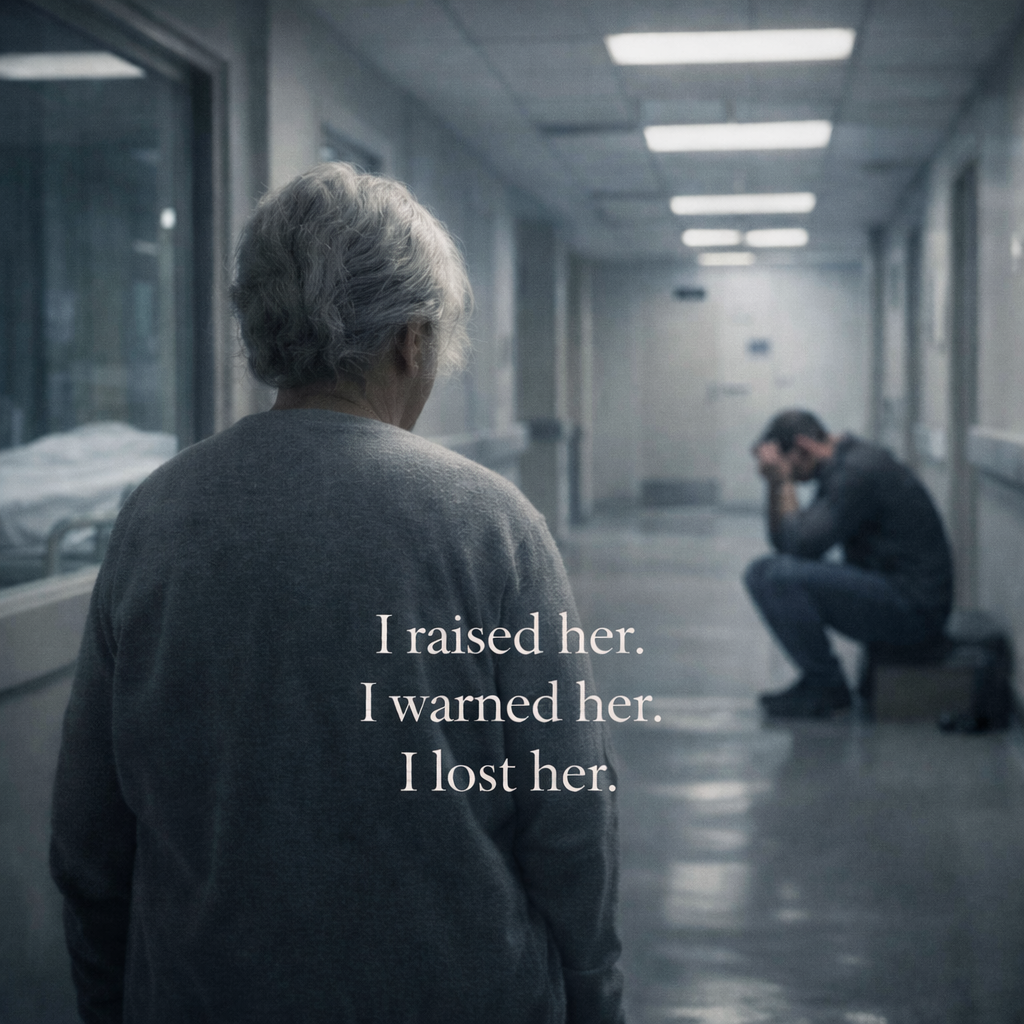
Outside the room, I saw him.
The man she loved.
The man who destroyed her.
He was sitting on the floor with his back against the wall, his head in his hands. He looked small. Broken. Like a boy who had just realised consequences exist.
Everyone expected me to shout at him. To slap him. To curse him.
But when I looked at him, all I felt was tired.
They had argued that night. She had called me, her voice low, careful, as if she didn’t want him to hear.
“Ma, we fought again,” she said.
I asked her about dinner, about work, about small things—because sometimes small things are easier than the truth.
“Come home if it gets bad,” I told her.
She said, “It’s okay, Ma. He’s just stressed.”
Those were the last words I heard from my daughter.
He was driving. Angry. Drunk enough to think he was fine. The road was wet. The car was fast. He thought love would forgive him.
The car didn’t.
People say it was an accident. I don’t. Accidents don’t have warning signs. Accidents don’t come after months of control, jealousy, apologies, and promises to change.
This was a decision that took seconds and destroyed generations.
In the ICU, before the doctor came, I held her hand. I spoke to her like she could hear me.
I told her it was okay to rest. I told her she didn’t have to be strong anymore. I told her I was there.
The machines answered me instead.
When the sheet covered her face, I realised something terrible and true: my daughter didn’t die in that room. She died the moment she chose someone who loved her carelessly.
And I don’t say that with anger. I say it with the wisdom grief forces into you.
I walked out of the hospital room later. My legs moved, my body obeyed, but I was no longer inside myself. Relatives came. Someone brought water. Someone said, “Be strong.”
I wanted to tell them that strength is just what people call survival when there is no other option.
Before leaving, I looked at him one last time. He stood up, tried to speak, then stopped. His eyes were red. His voice was gone.
I didn’t forgive him.
But I didn’t curse him either.
I said only one thing.
“You will wake up every day for the rest of your life. And she won’t.”
That is not revenge. That is truth.
Now my house is quiet. Too quiet. Her room is exactly how she left it. Her slippers are near the door. Her charger is still plugged in.
Sometimes I sit on her bed and talk to her. I tell her about the weather. About neighbours. About nothing.
Grief doesn’t fade. It settles. It becomes part of your posture, your voice, your eyes.
I am older now. Wiser in a way I never asked to be.
If someone reads this and thinks love is enough, please listen to an old woman who buried her child: love without safety is not love.
And if you are loved gently, protect it.
Some of us would give anything to go back and say just one different sentence on one ordinary night.
I would have told her to come home.